


真爱趁现在
Vijay Deverakonda to Portray a ‘real and Flawed’ Hero in Rowdy Janardhan_我的网站

A | Vijay Deverakonda's next, directed by filmmaker Ravi Kiran Kola, is being produced by Dil Raju via Sri Venkateswara Creations. While the movie's rumoured title (Rowdy Janardhan) will be made official a few days from now, the director's confessional "note" has piqued interest in the character being essayed by the Geetha Govindam and Kingdom star. Flawed, angry and wounded I have been waiting for a long time to tell this story about a man. I found him in my memory. He is very personal, and I have watched him and grown up seeing him. He is not perfect, but he is real. Flawed, angry, wounded - and more than I hated him, I loved him. This story had to be told. You will meet him," the director shared. "Flawed, angry, wounded" is what Vijay's character is going to be in the year 2026 release. Since Vijay has not played such a character in years (his character was wounded in Kingdom but it was not flawed), the characterization is expected to be layered. Strained relationships involving a complicated yet self-assured adult might be portrayed in the film. Themes of forgiveness, trauma, growth, and the complexity of love in imperfect domestic settings make for delectable stories. Rowdy Janardhan could well be one. Keerthy Suresh is the film's heroine. Vijay working on two films simultaneously The film's director, Kola, has previously made Raja Vaaru Rani Gaaru and that was six years ago. Vijay Deverakonda is also acting in a movie directed by Taxiwala and Shyam Singha Roy fame Rahul Sankrityan. Since the story is set in Rayalaseema region, this one is a first for the actor. Rashmika Mandanna is its female lead. This is the first time in his career that Vijay is filming for two movies at a time; they have been "extremely demanding" and have "taken up my life." Also Read: Vijay Deverakonda Lauds Ranveer Singh’s Dhurandhar, Says The Boys Were on Fire。
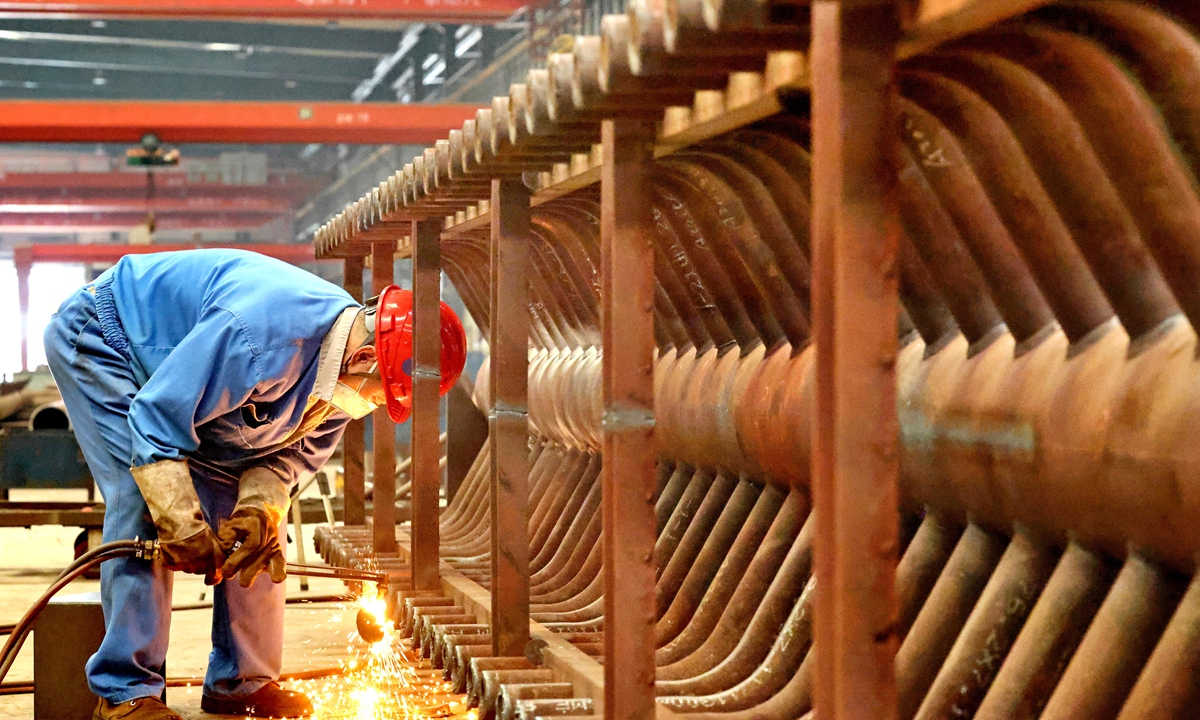
But what are the facts on the ground?
China's Ministry of Commerce recently released a document titled China's Position on the So-Called Excess Capacity Issue. Reviewing the evolution of the global capacity landscape from a historical perspective, it offers an objective analysis of how industrial subsidies, trade surpluses, economic imbalances and market competition relate to "overcapacity," sets out China's policy practices and the direction of its efforts, and puts forward China's ideas and proposals - a forceful response to the "China overcapacity" narrative.
Plainly, the argument that "China's inadequate domestic demand gives rise to excess capacity" rests on a logical sleight of hand - it takes a localized phenomenon at the micro level of the market and applies it wholesale to the structure of the macroeconomy, a picture far removed from reality.
China is not only a major manufacturing power but also a major consuming power. Domestic demand has long been the main engine of the Chinese economy.
To see through the logical fallacy of the "overcapacity" narrative, one must first be clear about where the Chinese economy actually sits in the global landscape.
In the course of economic globalization, China has actively integrated itself into the international division of industrial labor and become the "world's factory" in the truest sense. Chinese manufacturing has enriched the global supply of goods, lowered living costs for consumers in countries around the world, and played an important part in easing global inflationary pressure. But to define China simply as a "producer" on that basis, and from there to conclude that it suffers from "inadequate domestic demand and overcapacity," is a proposition that does not hold water.
From 2013 to 2024, domestic demand contributed an average of 93 percent to China's economic growth, with consumption and investment accounting for an average of 55 percent and 38 percent respectively. China's total retail sales of consumer goods rose from 23.8 trillion yuan ($3.53 trillion) in 2013 to 50.1 trillion yuan in 2025, doubling in size.
Measured at the World Bank's purchasing power parity rates, China's total retail sales of consumer goods in 2025 were 1.7 times those of the US, making the country the world's largest market for consumer goods in all but name. China today ranks first globally in the physical volume of goods consumed, and its per capita annual consumption of some industrial products already approaches the levels seen in developed economies.
China keeps expanding its domestic demand and is working toward a higher-level balance between supply and demand.
Growth in China's total retail sales of consumer goods has slowed somewhat in recent years, and some have taken this as proof of weak domestic demand. That reading is neither objective nor complete.
A strong domestic market provides strategic support for Chinese modernization. The outline of China's 15th Five-Year Plan (2026-30) period devotes a dedicated part to building such a market, stressing the need to adhere to the strategic focus of expanding domestic demand, to expand effective investment, to further implement special actions to boost consumption, to promote the expansion and upgrading of commodity consumption, to unleashing the potential of service consumption, to strengthening the foundation of residents' consumption and to continuously improve the consumption environment - using new demand to guide new supply, and using new supply to create new demand, so as to promote a virtuous cycle between consumption and investment, and between supply and demand, achieve a higher level of dynamic balance between supply and demand.
The slowdown in retail sales growth is consistent with China's shift from high-speed growth to high-quality development, and it also reflects the upgrading of the country's consumption structure. China's consumer market is moving faster from one dominated by goods toward one in which goods and services carry equal weight. Spending on services is growing rapidly and is expected to account for more than half of the total by 2030.
China's super-sized market is not only the bedrock of its own development but also a broad platform on which countries around the world can share in the dividends of that growth.
China has ranked as the world's second-largest importer for 17 consecutive years and is a major export destination for nearly 80 countries and regions. It has granted zero-tariff treatment to 63 countries and regions, becoming the first major economy in the world to extend full zero-tariff coverage to every African country and every least developed country that has diplomatic relations with it. It is also the only country to host an international import expo, having staged eight editions of the China International Import Expo with cumulative intended deals worth more than $580 billion. Over the 14th Five-Year Plan period (2021-25) period, China's cumulative imports topped 90 trillion yuan. These facts and figures show clearly that China is not just the "world's factory" but, still more, the "world's market."
Looking ahead, China's middle-income group is set to exceed 800 million people within little more than a decade, and per capita GDP is expected to reach the level of a moderately developed country. With vast room for consumption and ample potential and vitality, domestic demand will remain the main engine of China's economic development and will keep injecting strong momentum into world economic growth.
This was compiled and translated by the Global Times English edition based on an article published in the "Chisu Jinsheng" economic commentary column of the People's Daily on August 6, 2026.
。

B |
Current article:http://fuy2s.shaihanhuangwoshang.cyou/1l7nur/20260826/1450.html
Published on:13:53:59
 填补国产空白:东南大学手术机器人具备接近人手精细力觉感知能力
 《征召15:黑行动4》正式宣布“吃鸡”模式17天免费。
 民众举报台军少将出入情色场所,反接到来电威胁“不要声张”
 【现货】8月19日海外各地区合成橡胶现货市场价格汇总
 微视频|街采:石家庄市民消费习惯大调查
 Steam 喜加一:原价 74 元《微软模拟飞行 2024》游戏数字原声带免费领
 探访“中国云谷”:看见绿色算力的真实模样,探访“中国云谷”:看见绿色算力的真实模样
 国内首个批量退役风电机组梯次利用项目启动
 Pak to demarche US envoy over Biden's statement on nukes: FM
 上海市场高顺顺丁橡胶价格区间下跌
 “龙餐馆”官宣出海!
 直面停水催费、质价失衡、电梯隐患 杭州“公述民评”问政小区物业难啃的“硬骨头”